A border that performs for three glorious weeks in April and then does nothing for the rest of the year is a waste of good soil. Layering bulbs — often called lasagne planting — is the simplest way to stretch that performance from late winter into early summer. You use the same pot, the same hole, the same square metre of ground, but you fill it at three different depths with bulbs that flower at three different times. Get the order right and crocuses come up through the cold, daffodils carry you through March, and tulips finish the job in May.
What layering actually does
Bulbs are planted at different depths depending on their size. A tulip wants to sit 15–20cm down; a crocus corm is happy at 5cm. That difference is the whole trick. Instead of planting one layer of one type of bulb, you stack them: the biggest, latest-flowering bulbs at the bottom, smaller and earlier ones above, each sitting in its own layer of compost.
The layers do not compete. By the time the crocuses are fading in early March, the daffodil shoots are already pushing past them, and the tulips are still deep underground, quietly making roots. Each set of bulbs gets the depth it needs, and you get a succession rather than a single burst.
Choosing bulbs for a three-act spring
Pick varieties with genuinely different flowering times, not just different names. In a UK garden, a reliable sequence runs something like this:
- Late February to March: Crocus tommasinianus and Crocus chrysanthus varieties, plus snowdrops and dwarf iris if you have room for a fourth layer.
- March to early April: early daffodils such as 'Tête-à-Tête' and 'February Gold', then mid-season Narcissus like 'Thalia' and 'Actaea'.
- April: species tulips — Tulipa turkestanica, T. humilis, T. batalinii — which are short, early and excellent for pots and gravel.
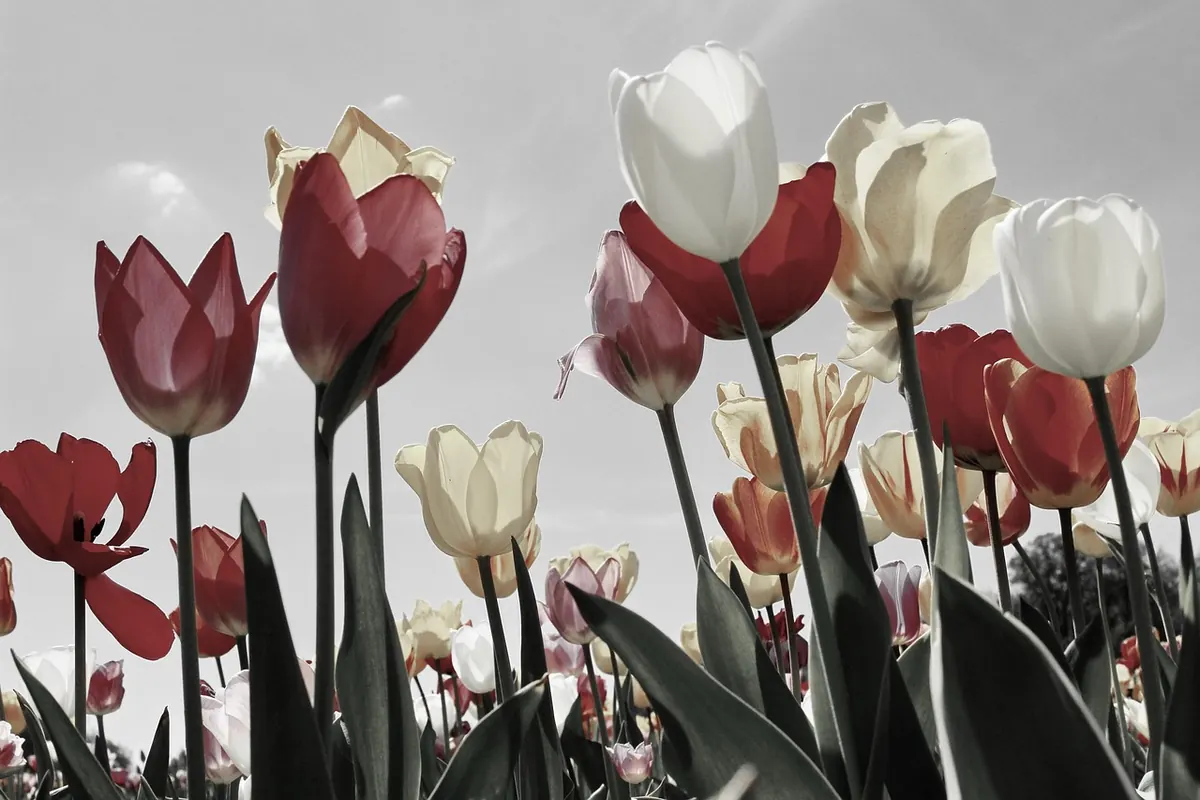
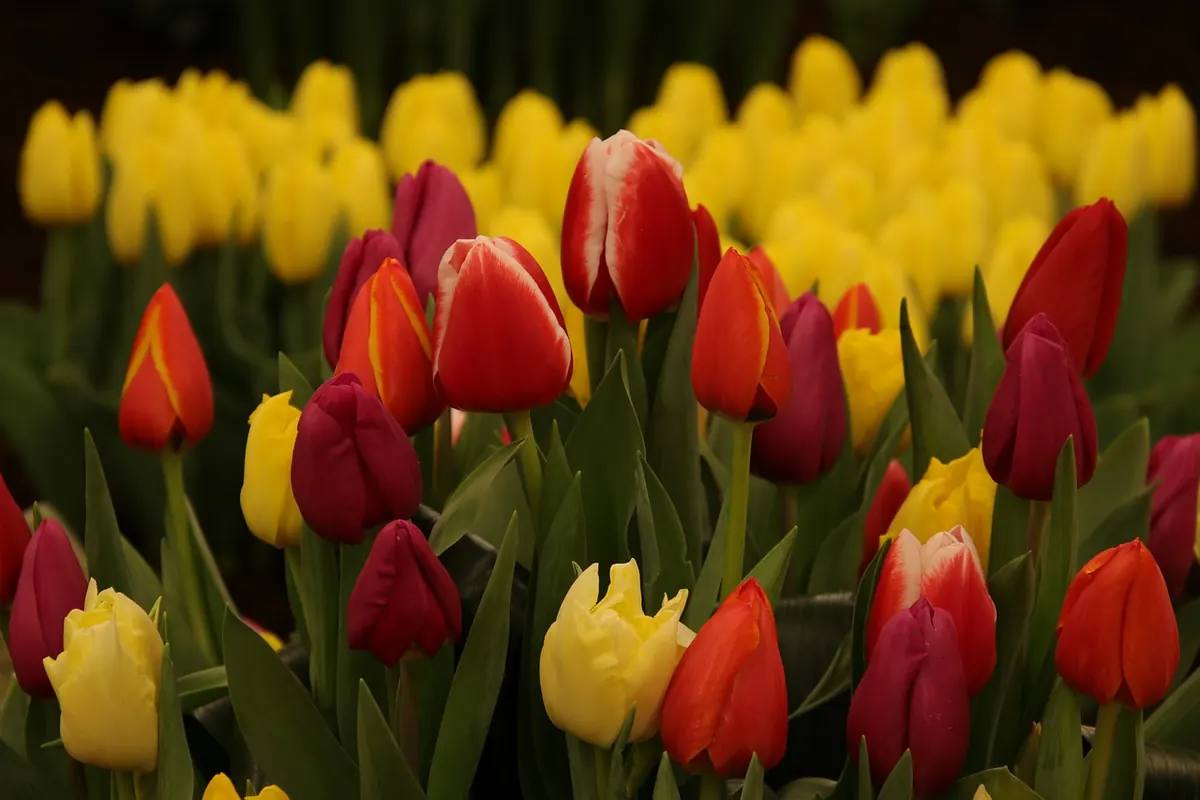
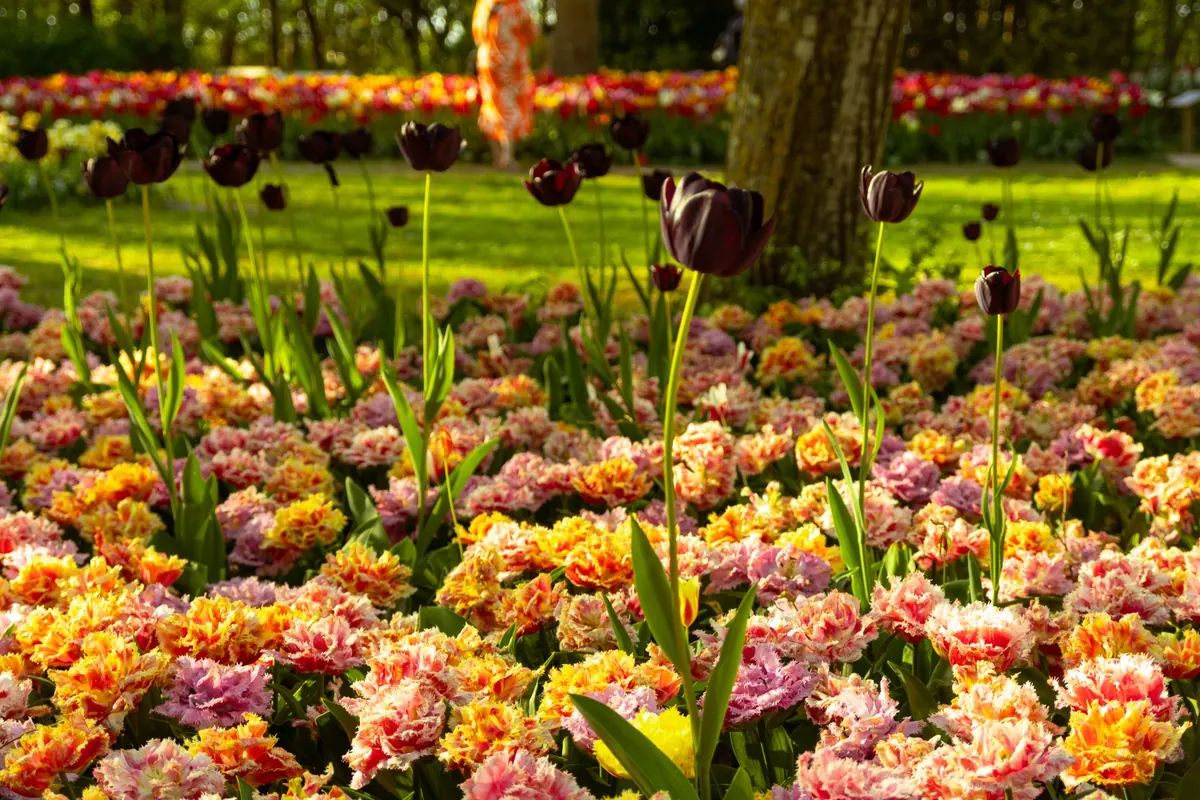
- Late April to May: the big garden tulips. 'Queen of Night', 'Ballerina', 'Mount Tacoma' and 'Spring Green' all flower over several weeks if you choose a mix of early and late varieties.
One caution: autumn-flowering crocuses such as Crocus speciosus and saffron crocus flower before the spring bulbs have even started, so keep them in their own pot rather than burying them in the stack.
Depth, compost and containers
As a rule, plant a bulb about three times its own height below the surface. In practice that means tulips at 15–20cm, daffodils at 10–15cm, and crocuses at 5–7cm.
For a three-layer pot, you need depth rather than width: 35–40cm of compost is about right, which means a pot of at least that depth. Wide, shallow bowls look generous but leave no room to stack.
Use a peat-free multipurpose compost mixed with roughly a quarter horticultural grit. Bulbs rot in heavy, wet compost, and the grit keeps air moving around them. If your garden soil is clay, treat a border planting the same way — fork in grit and a little garden compost before you start. Make sure the pot has plenty of drainage holes and stand it on feet so water cannot pool underneath.
How to plant a layered pot
- Half-fill the pot with your compost and grit mix, leaving the base of the first layer about 20cm below the eventual surface.
- Set the tulip bulbs in place, pointed end up, spaced roughly one bulb-width apart. They can sit close, but they should not touch each other.
- Cover with 5cm of compost and firm it gently. That gap matters: bulbs pressed against the layer above tend to rot.
- Add the daffodils, spaced a little more generously, and cover with another 5cm.
- Finish with the crocuses, no more than 5cm below the surface, then top up with compost to about 2cm below the rim.
- Water well, label the pot with what you planted, and put it somewhere cool and sheltered — against a wall or in a cold frame — for the winter.
If squirrels are a problem, lay a piece of chicken wire over the surface and weight it down. They will dig up crocus corms and tulips with enthusiasm, and the wire is easier than replanting.
Layering in borders, grass and raised beds
In open ground, dig one hole wide enough to take the whole group, roughly 25cm deep, and build the same stack. It is faster than planting three separate trenches and it keeps the flowering times together, which is what makes the display look deliberate.
Mark the spot with a cane or a couple of small labels. Six months later, when you are deciding where to put the summer annuals, you will be glad you did.
In grass, crocuses and daffodils naturalise beautifully; tulips are less reliable there over several years. Remember that bulb foliage in a lawn cannot be mown until it has yellowed, usually into late June, so keep the layered planting to the edges where you can leave the grass long.
Aftercare, and the mistakes that undo it
Once flowers fade, snap off the heads of tulips and daffodils so the plant puts energy into the bulb rather than seed. Leave the foliage alone until it comes away with a gentle tug — usually about six weeks. Feed with a high-potash liquid feed, such as a tomato feed, while the leaves are still green.
Pots dry out fast in spring, so water as the shoots grow and while plants are in flower; a dry spell shortens the display noticeably. Good ventilation and fresh compost each year help prevent tulip fire, a fungal problem that shows as blotchy, twisted leaves. Lift and bin any affected bulbs and foliage, and avoid replanting tulips in the same compost or the same spot for a season or two.
Finally, decide what you want from the tulips. In pots, many gardeners treat them as annuals: let the foliage die back, then empty the pot and start fresh in autumn. If you want them to flower again, leave them in the ground, keep feeding, and accept that the second year is often less impressive than the first.
Start with three layers
You do not need a complicated scheme. Choose one tulip, one daffodil and one crocus, plant them in October at the depths above, and wait. If you have space for a second pot, shift the timings — an early tulip in one, a late one in the other — and the display stretches further still. Planted now, that single stacked pot will give you colour for three months, from the first crocus to the last tulip.