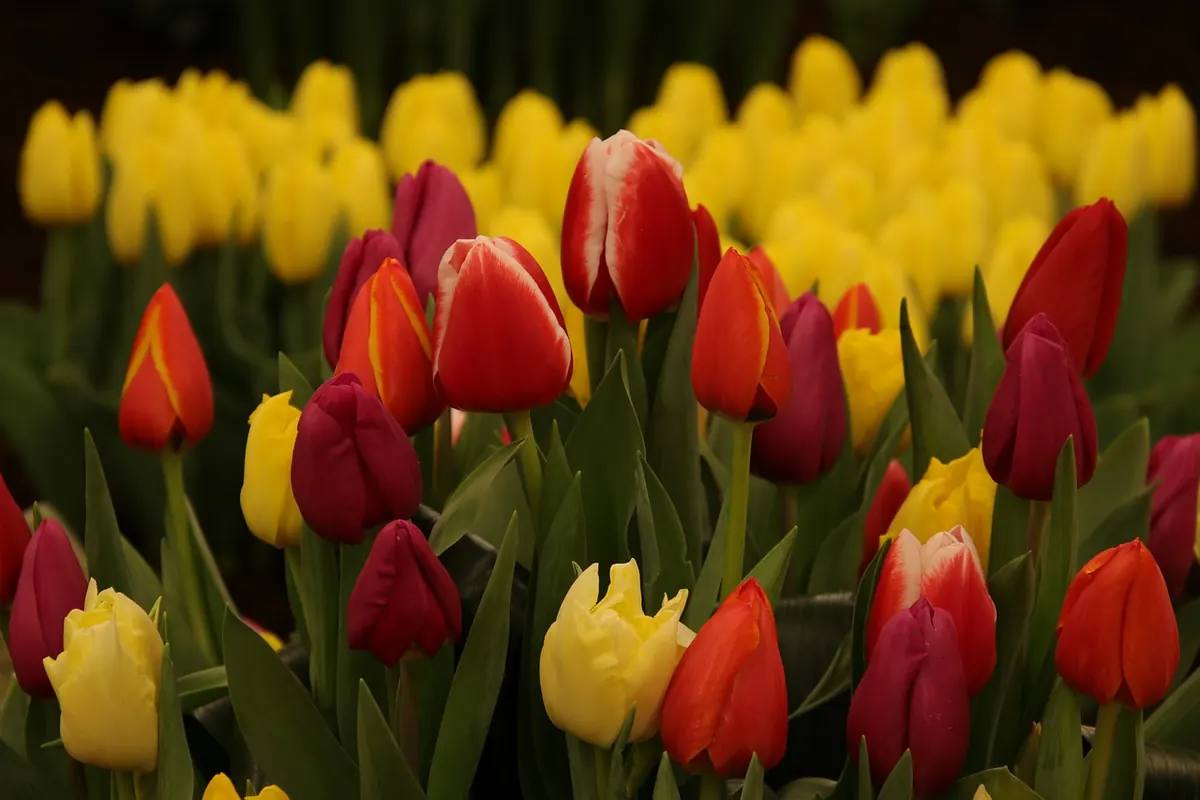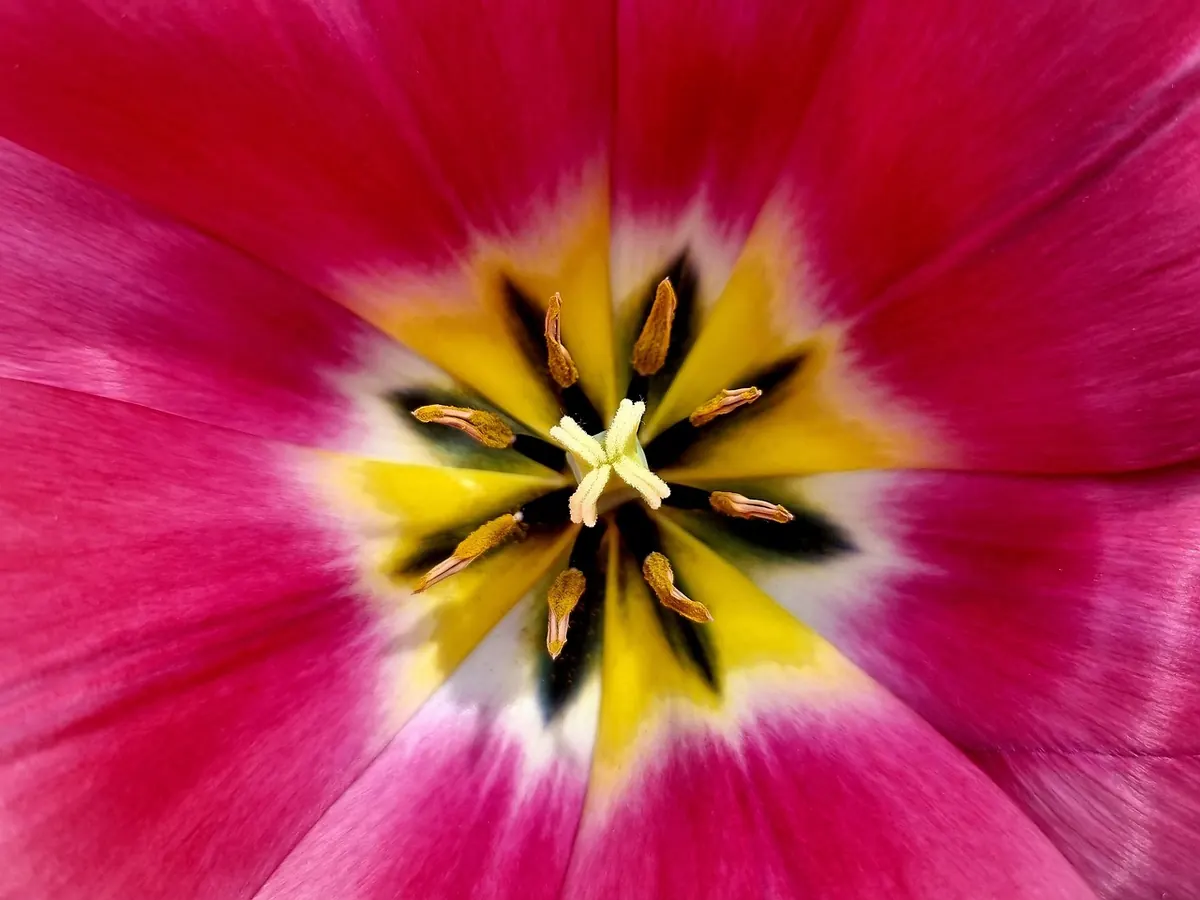
Every October the same decision comes round. Do you buy the fat, glossy hybrids lined up on the garden centre bench, or a paper bag of smaller bulbs from a specialist who sells species tulips by the dozen? They are not really rivals. They do different jobs, and choosing well comes down to what you want from the patch of ground you have in mind.
The real difference between the two
Species tulips are the wild originals. Tulipa tarda, T. clusiana, T. sprengeri, T. humilis and their relatives grow on rocky slopes, steppe and mountain scree from Turkey across to Central Asia. They are small, often 10–25cm tall, and they behave like wild plants: they set seed, produce offsets and, given the right conditions, build into loose colonies rather than neat rows.
Hybrid tulips are the product of centuries of breeding. Darwin hybrids, Triumphs, lily-flowered, parrot, fringed and double forms have been selected for larger flowers, longer stems, a broader colour palette and flowering that happens on cue. That predictability is exactly what you want in a bedding scheme — and exactly what makes them more demanding in the long run.
Longevity and naturalising
This is where the two groups part company most sharply. Species tulips are the naturalisers. Left undisturbed in ground that bakes dry in summer, they come back every spring and often increase. Lifting and storing them usually does more harm than good, because the bulbs sit deep and resent being disturbed.
Hybrids are more variable. Some groups repeat well in a sunny, sharply drained border; others fade after a season or two and are best treated as annuals, however much that stings. Roughly speaking:
- Most likely to return: Darwin hybrids, Triumphs, single early tulips, and the low-growing kaufmanniana and greigii hybrids with their marbled leaves.
- Reliable in a good year, patchy otherwise: single late tulips and fosteriana hybrids such as 'Purissima'.
- Best treated as one-season plants: parrot, fringed, double late and most lily-flowered tulips, which look magnificent once and rarely repeat with the same vigour.
Disease matters too. Tulip fire, a fungal problem that causes distorted shoots and brown blotches, builds up in soil where tulips are grown repeatedly. Affected plants should be lifted with the soil around them and binned, not composted, and tulips should not go back in that spot for several years. Species tulips grown in gravel or among other plants tend to suffer less, simply because they are not packed into the same bed year after year.
Colour, form and presence
If you want a specific colour — near-black, apricot, green-flushed, soft pink, deep burgundy — a hybrid will supply it. Stems reach 40–70cm, flowers are large and uniform, and a row of them reads as a deliberate design decision from thirty paces away.
Species tulips work at close range instead. The palette is narrower: reds, yellows, creams, magentas and pinks, usually with a contrasting centre or a stain of colour on the outer petals. What they lack in size they make up for in detail — the starry white-and-yellow flowers of T. tarda, the crimson-edged white petals of T. clusiana 'Lady Jane', the silvery striped leaves of the greigii types, the several flowers carried on a single stem of T. turkestanica.
For cutting, hybrids win outright. Species tulips are too short and too small to earn a place in the vase; they are garden plants, meant to be seen where they grow.
Where each type earns its place
- Species tulips: gravel gardens, rockeries, the front edge of a sunny border, gaps between perennials, under deciduous shrubs, and pots that can be left to dry out in summer. Their short stems also make them the sensible choice for windy, exposed sites where taller tulips snap.
- Hybrid tulips: bedding displays, cutting beds, large containers, spring pots combined with wallflowers or forget-me-nots, and anywhere you want a strong block of colour for a few weeks.
Planting and aftercare, done properly
Almost every tulip disappointment traces back to drainage and summer moisture. Tulips need sun for most of the day and soil that drains fast. In heavy clay, plant on a 5cm layer of grit and mix grit into the backfill, or grow them in pots.
- Plant from late September to November, while bulbs are firm and plump.
- Set species tulips about 10–15cm deep and hybrids 15–20cm deep — roughly three times the bulb's own height. Deeper planting helps them repeat.
- Space bulbs a bulb's width apart, or closer if you want an immediate clump.
- Deadhead after flowering so energy goes into the bulb, not seed, unless you want species tulips to self-sow.
- Leave the foliage for at least six weeks. Yellowing leaves are the bulb refilling, not a mess to tidy away.
- Keep summer water off them. If they sit in a pot, move it behind a shed or against a warm wall and let the compost dry out completely.
Squirrels and mice will dig for freshly planted bulbs, particularly in light soil. A sheet of mesh or chicken wire laid just below the surface, or a layer of prickly holly leaves over the planting spot, is usually enough to put them off.
A practical way to plant both
You do not have to choose. Put species tulips in the gravel at the front of a border or along a path, where they can stay put for a decade and quietly spread. Behind them, plant Darwin hybrids or Triumphs for height and colour, and accept that you may replace them in two or three years. In pots, fill with hybrids for a single show, then tip the compost onto the border and start again next autumn.
The short answer
Grow species tulips if you want tulips that behave like perennials — small, characterful, tolerant of neglect and returning year after year in a sunny, well-drained spot. Grow hybrid tulips if you want size, colour choice and impact, and are happy to treat them as an annual expense. If you want a middle path, plant Darwin hybrids, which give you the big garden performance with a genuine chance of a repeat flowering. Buy bulbs from a specialist rather than a bargain bin, plant them deep, keep the summer rain off, and both kinds will repay you.
Photo: DEibrinkJansen / Pixabay