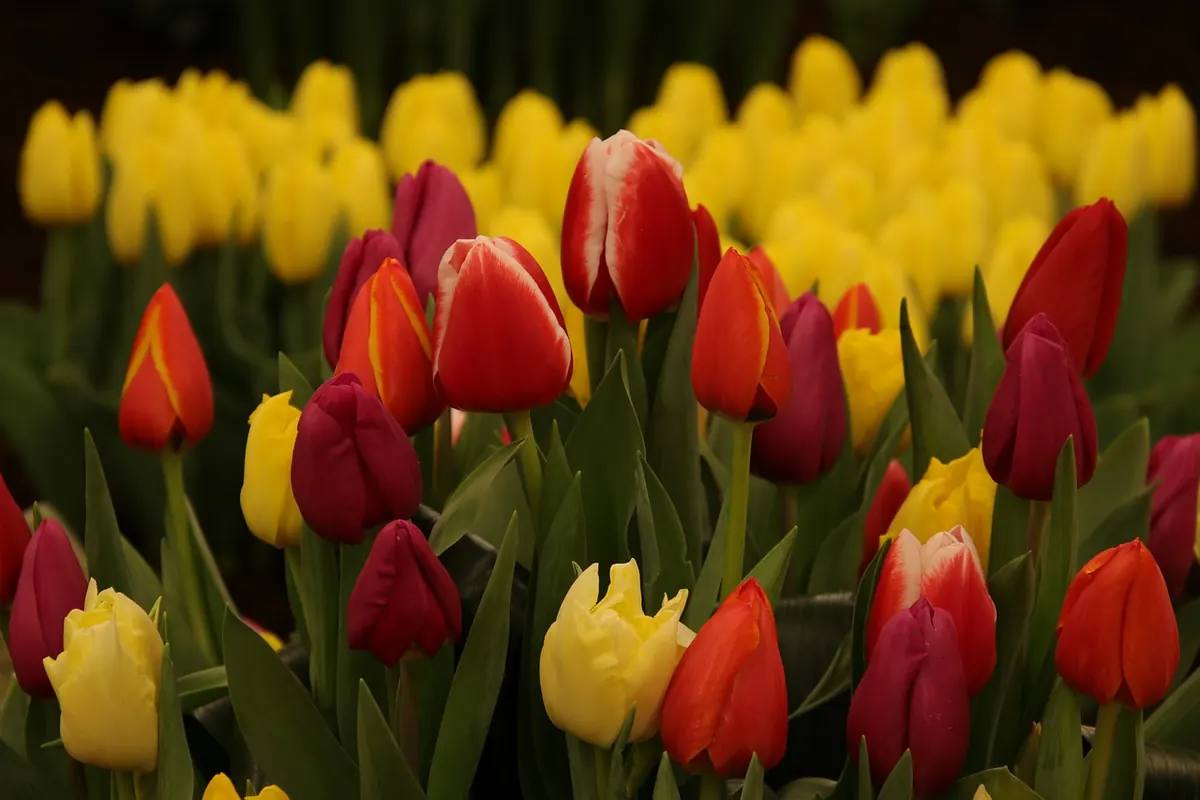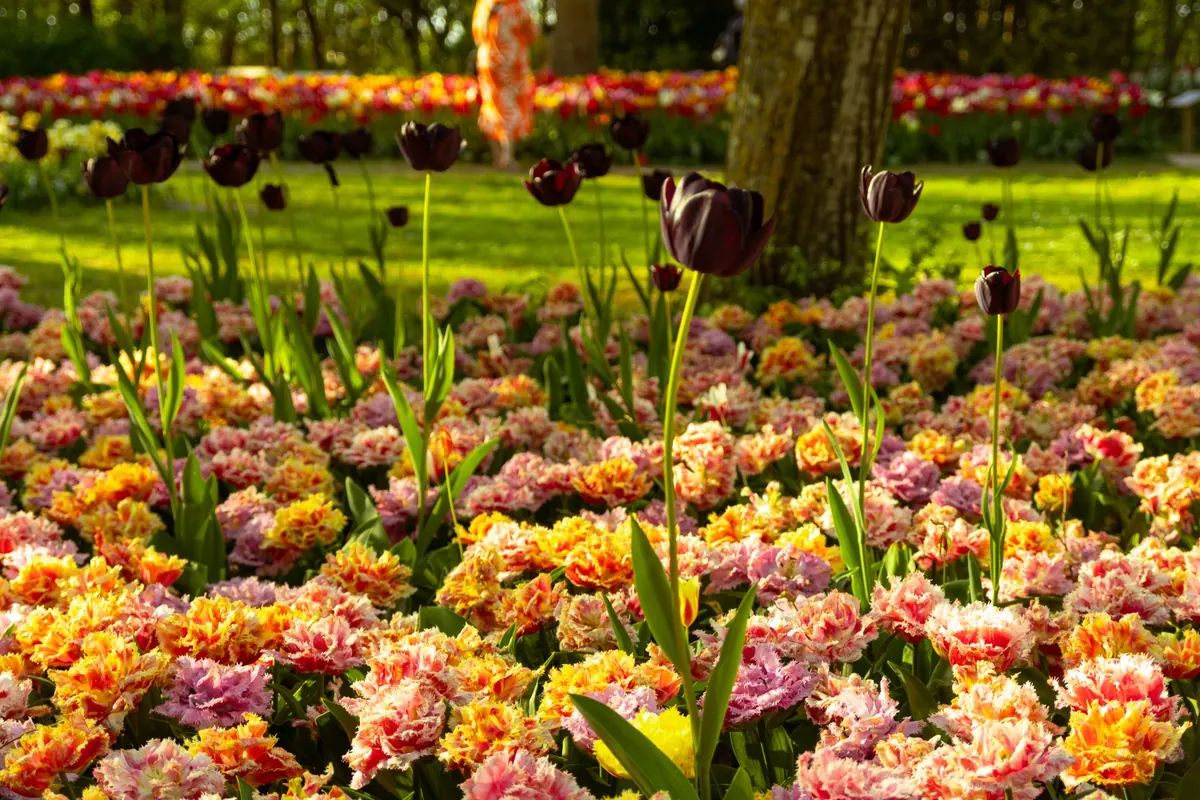
Small UK gardens can still have a generous spring display. A patio corner, a balcony railing or a few steps by the back door are enough for tulips, provided you work with the space rather than against it. Balconies bring wind, reflected heat and limited root room; patios can be shaded by fences or walls. Tulips cope well in pots when they have drainage, light and a little protection. These ideas focus on arrangement, tiers and colour, so a compact plot feels considered from March to May.
1. Choose pots that earn their place
Tulips hate sitting in sodden compost. Whatever you choose — terracotta, glazed ceramic, plastic or a woven planter with a liner — make sure there are drainage holes and that crocks or gravel are not blocking them. Depth matters more than width. A pot around 30cm deep gives roots room to anchor and helps prevent the whole display toppling in a gust. Wide, shallow bowls can work for dwarf varieties, but they dry out faster and offer less stability.
Weight is a practical concern on balconies. Large pots filled with compost are heavy, so check what your balcony can safely hold and place the heaviest containers near the wall or over a supporting beam. Pot feet lift containers off the ground, improving drainage and reducing staining on paving.
- Use peat-free multipurpose compost mixed with horticultural grit for drainage.
- Plant bulbs pointed end up, roughly two to three times their own depth.
- Space bulbs so they are close but not touching; they look better in groups.
- Top with a layer of grit to deter squirrels and mark where bulbs are planted.
- Water after planting, then keep compost barely moist until growth appears.
2. Build height with tiers, not clutter
Height makes a small space feel designed. A single row of pots at ground level can look flat, especially on a balcony. Use a three-tier arrangement: tall tulips at the back, medium varieties in the middle, and low-growing bulbs or spring bedding at the front. A simple wooden step, a sturdy plant stand or a shelf fixed to a wall can create that ladder effect without taking up more floor space.
Keep the palette of containers calm. If your pots are a mix of bright blue, orange and lime, the tulips have to compete. Choose one finish — aged terracotta, zinc, matte grey — and repeat it. On a narrow balcony, a railing planter adds a second tier at waist height, while a small bracket shelf holds a single pot of something special.
A three-tier planting recipe
Back: a 10-litre pot with a tall late tulip such as 'Queen of Night'. Middle: a 5-litre pot with a mid-season double in cream or apricot. Front: a shallow bowl of violas and muscari. The eye moves from dark to light, and the display has structure even before the tulips open.
3. Use colour combinations that hold a small space together
In a large border, many colours can settle into a tapestry. In a small garden, too many saturated colours can look frantic. A reliable rule is two main colours plus one accent. Repeat those colours in different pots so the eye travels around the space. Deep purple and white is crisp and works well against brick or grey walls. Apricot, copper and burgundy feel warmer and suit south-facing patios. Pale pink with silver-grey foliage is soft and forgiving in light shade.
Tulip varieties are grouped by flowering time and shape, so you can be precise. 'Purissima' is a soft white, 'Spring Green' has white petals with green markings, and 'Ballerina' is a scented orange lily-flowered tulip. Combine them with forget-me-nots or muscari for a blue note that makes the tulips sing.
- Cool and dramatic: deep purple tulips with white, plus blue muscari.
- Warm and glowing: apricot and orange tulips with burgundy wallflowers.
- Soft and romantic: pale pink and cream tulips with violas and silver foliage.
4. Plant in waves for a longer spring
One pot of tulips gives you two or three weeks. Several pots, chosen for different flowering times, can give you eight or ten. Look for labels that say early, mid or late season, and plant a sequence. Start with low dwarf tulips in early March, follow with mid-season doubles in April, then finish with tall late varieties in May. In a small space, this succession matters more than having one enormous display.
- Early: dwarf tulips in cream, white or soft yellow.
- Mid: double or fringed tulips in apricot, pink or burgundy.
- Late: tall Darwin hybrid or lily-flowered tulips in strong colours.
- After flowering: deadhead, feed, and let leaves die back before replacing with summer annuals.
If you have space for only one pot, choose a mid-season variety that flowers for longer, and underplant with violas that continue after the tulips fade.
5. Pair tulips with companions in the same pot
Tulips look better with something at their feet. Bare compost is not a design feature. Shallow-rooted companions fill the gap without stealing too much moisture. Violas, forget-me-nots, wallflowers, bellis and muscari all work well. They also hide the dying foliage of early tulips, which is useful when you are waiting the necessary six weeks before cutting it back.
Plant bulbs first, then add companions as small plugs or seedlings. Avoid vigorous trailing ivy or large grasses, which will smother the tulips and make the pot look messy. If you want scent on a balcony, add wallflowers, or keep a separate pot of hyacinths nearby.
6. Shelter, water and pest-proof your display
Wind is the main enemy on balconies. Tall tulips can snap or lean, so choose sturdy varieties or place pots against a wall or railing. A temporary screen of trellis or horticultural fleece can help during exposed spells. Water when the top few centimetres of compost feel dry, but never leave pots standing in water. In warm, sheltered spots, check daily.
Squirrels and mice dig up bulbs. A layer of grit, a piece of chicken wire laid over the compost, or a mesh cover until shoots emerge usually solves the problem. Slugs and snails nibble young leaves; check under pots and around the rims after rain. Aphids can cluster on stems in spring — a firm jet of water is often enough.
7. A compact balcony plan you can copy
For a balcony about one metre wide and two metres deep, try this. Place a rectangular pot, about 50cm long, against the wall. Fill it with tall late tulips in deep purple, underplanted with white violas. On one side, set a smaller pot of early dwarf tulips in cream. On the other, a railing planter with muscari and forget-me-nots. Add a single pot of 'Ballerina' for scent near the door. The colour scheme is purple, white and blue, with orange as a small accent. It looks deliberate,
Photo: John-Silver / Pixabay